


Faculty
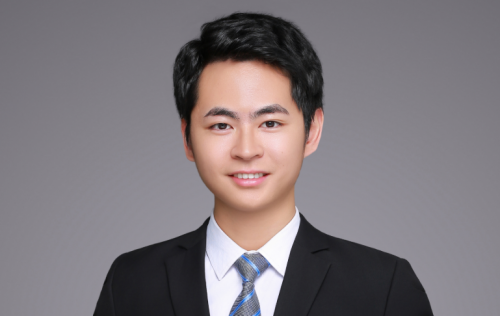
Dr. Longxi Zhou is an Assistant Professor and Doctoral Supervisor in the Department of Biomedical Engineering at the Southern University of Science and Technology (SUSTech). He received his dual Bachelor’s degrees in Applied Physics and Computer Science and Technology from the University of Science and Technology of China (USTC). He subsequently earned his M.S. and Ph.D. degrees in Computer Science from King Abdullah University of Science and Technology (KAUST).
His research interests encompass the design of medical AI in high-stakes scenarios, the development of novel diagnostic pathways and imaging algorithms, the creation of AI tools for biological mechanism discovery, and the clinical translation and industrial application of medical imaging AI. He maintains deep cooperative relationships with numerous top-tier hospitals and enterprises and has led prospective clinical AI trials.
The Zhou’s Lab possesses abundant proprietary data, high-performance computing resources, and access to clinical trial infrastructure. We warmly welcome Master’s students, PhD candidates, Postdocs, and Visiting Scholars to join us. (Interested applicants are invited to email their CV and relevant materials to Dr. Zhou directly.)
Education Background
2014 - 2019: B.S., University of Science and Technology of China (USTC)
2019 - 2021: M.S., King Abdullah University of Science and Technology (KAUST)
2021 - 2025: Ph.D., King Abdullah University of Science and Technology (KAUST)
Work Experience
2026 - Present: Assistant Professor, Department of Biomedical Engineering, SUSTech
Research Directions & Highlights
Direction 1: Sub-visual Lesion Analysis & Visualization (Core Advantage: Extensive algorithmic accumulation and clinical trial resources)
Modern AI holds the potential to detect subtle pathological alterations that are imperceptible to the human eye; however, realizing this capability requires exceptionally robust algorithms to prevent model hallucinations and spurious findings. We aim to establish a “Medical Imaging Microscope” through two complementary strategies:
(1) developing targeted denoising and tissue-background suppression algorithms (e.g., suppressing signals from normal lung or brain tissue) to directly expose sub-visual anomalies in routine clinical images; and
(2) leveraging multi-modal registration to obtain objective ground truth, enabling the training of AI models that surpass human sensitivity, followed by principled model and feature visualization.
Strategic Advantage. This exploration-oriented research direction offers a highly favorable risk–reward profile. In the best-case scenario, it enables the discovery of previously unrecognized lesions or disease mechanisms, leading to high-impact publications. Even under conservative outcomes, it will generate broadly applicable, high-quality algorithms for denoising, registration, and visualization, ensuring sustained contributions to leading technical journals and conferences.
Direction 2: Multi-modal Vessel Segmentation & Downstream Tasks (Core Advantage: Possession of over 10,000 high-quality multi-modal data annotations)
Vessel segmentation is a fundamental building block for surgical planning, disease detection, and multi-modal image registration. Despite its importance, vascular structures remain poorly characterized or even entirely unexplored in many imaging modalities, such as structural MRI. Addressing these gaps not only has the potential to substantially improve cross-modal registration accuracy, but also to unlock new ways of interpreting routinely acquired medical images.
A particularly exciting direction is the reconstruction of vascular information from standard non-contrast scans or conventional MRI, which could provide low-cost, non-invasive alternatives to contrast-enhanced examinations and enable earlier risk assessment in clinical practice. Beyond segmentation itself, this direction emphasizes downstream tasks, including the analysis of latent vascular morphological features within specific disease models. Such analyses may uncover previously unrecognized pathological associations and offer new insights into disease mechanisms.
Direction 3: User-Centric Trustworthy AI (Core Advantage: Direct engagement with clinicians and patients to leverage insights into real-world needs)
We view trustworthy AI not merely as a matter of algorithmic performance, but as a system’s ability to be understood, questioned, and rationally applied by its users. This user-centric perspective is essential for real-world clinical deployment and aligns with emerging global standards for medical AI, including the WHO’s principles on transparency and intelligibility and the EU AI Act’s requirements for high-stakes AI.
In practical clinical settings, our central goal is to address the diverse, and often unpredictable questions raised by clinicians and patients: When can I trust this result? Why does the model behave differently in this case? What are the risks of acting on this output? To tackle these challenges, we pursue three complementary research directions:
1. Robustness to Long-Tail Distributions. We develop deep-learning or biophysical methods to generate rare and extreme corner cases for stress training, together with advanced data standardization and generalization techniques to improve model reliability under real-world variability.
2. Ontology-Level Intepretability. We design models whose outputs are grounded in explicit causal or physiological logic, ensuring a clear connection between AI predictions and physical reality, rather than relying solely on statistical correlations.
3. Process Integration and Traceability. We build modular AI systems that support error tracing, auditability, and uncertainty quantification, including reliable posterior probabilities to facilitate informed clinical decision-making.
Direction 4: Interdisciplinary Innovation & Full-Stack Medical AI Engineering (Core Advantage: Interdisciplinary guidance across Physics, Biology, and Medicine; Full-lifecycle algorithmic expertise)
This direction is designed for undergraduate and master’s students with a broad interest in medical AI who seek systematic training and hands-on experience across the full technical and translational pipeline, before specializing in a particular research focus. It emphasizes interdisciplinary thinking and practical problem-solving, providing a structured pathway from foundational concepts to real-world medical AI applications.
Students in this direction benefit from close interdisciplinary mentorship and exposure to the entire lifecycle of medical imaging and AI development, including imaging physics, denoising and super-resolution, image registration, segmentation and classification, outcome and survival prediction, and the design of prospective clinical studies. The goal is to cultivate full-stack medical AI engineers and researchers who not only develop algorithms, but also understand how these methods integrate into clinical workflows and translational research.
Representative Publications
1. Yuetan Chu#, Longxi Zhou#, et al., “HorusEye: A self-supervised foundation model for generalizable X-ray tomography restoration” Nature Computational Science (Accept in Principle)
2. Longxi Zhou et al., “An interpretable deep learning workflow for discovering subvisual abnormalities in CT scans of COVID-19 inpatients and survivors” Nature Machine Intelligence, 4, 494–503 (2022).
3. Longxi Zhou et al., “A Rapid, Accurate and Machine-Agnostic Segmentation and Quantification Method for CT-Based COVID-19 Diagnosis”. IEEE Transactions on Medical Imaging, 29, 8, 2638-2652 (2020).