


Faculty
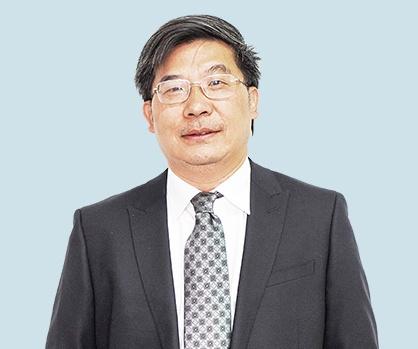
SELF-INTRODUCTION:
Our long-term goal is to understand the mechanism and function of ubiquitin/proteasome-mediated proteolysis. Specifically, we aim to determine how key cellular regulators are selected for degradation by the proteasome via an integrated approach (biochemistry, biophysics, genetics, genomics and proteomics). We have used both yeast and mammalian cells as our experimental systems. As PI on the American Cancer Society-, NIH- and DOD-funded grants, we have developed unique angles and novel assays to define how proteins (e.g., a telomere regulator Cdc13, the p53 tumor suppressor, prion PrP, a Histone variant Cse4 etc.) are selected and escorted to the proteasome, and also the significance of regulated proteolysis in cancers and prion diseases. Over the years, we have established productive collaborations with other domestic (e.g., U. of Colorado, Ohio State U., St. Jude‘s) or international researchers (e.g., Canada, Japan, China), and published several papers from each project. We have carved out our niches and have a demonstrated record of successful and productive research projects in an area of high relevance for human health and diseases.
EDUCATION:
1985 - 1989 Wuhan University BS in Chemistry
1989 - 1991 Boston University MS in Chemistry
1991 - 1996 State University of New York at Stony Brook & Cold Spring Harbor Laboratory, Ph.D
WOKRING EXPERIENCE:
1997-2002 Postdoctoral Fellow, California Institute of Technology. (Advisor: Alex Varshavsky)
2002-2008 Assistant Professor, Department of Molecular Medicine/Institute of Biotechnology, The University of Texas Health, San Antonio
2008-2019 Associate Professor with tenure, Department of Molecular Medicine, The University of Texas Health, San Antonio
2019 – 2020.10.09 Professor with tenure, Department of Molecular Medicine, The University of Texas Health, San Antonio
2020.10.12 - Present Professor with tenure, Department of Biochemistry, School of Medicine, The Southern University of Science and Technology
HONORS AND AWARDS:
2006 The American Association for Cancer Research Minority-Serving Institution Faculty Scholar Award in Cancer Research.
1998-2001 Postdoctoral Scholarship, Leukemia & Lymphoma Society of America.
1996 Graduate Research Award, State University of New York at Stony Brook.
Research:
MANUSCRIPT REVIEWER AND EDITOR:
Editorial Board: J. Biol. Chem.; Frontiers in Cell and Developmental Biology and Oncology; Adv. In Biol.,; J. Membrane Sci. Tech.
Journal Reviewer: Nature, Cell, Oncogene, PNAS, EMBO, EMBO Reports, JBC, MCB, MBoC, JCB, BMC Biochemistry, Chemistry & Biology, Yeast etc.
Grant reviews: NIH, Italian Ministry of Health, Qatar National Research Fund, Research Grants Council of Hong Kong, US-Israel Binational Science Foundation, the Wellcome Trust/DBT India Alliance, Canadian Discovery Grant, Taiwan Research Grant
PUBLICATIONS:
1. Rao, H., Marhrens, Y. and Stillman, B. (1994) Functional conservation of modular elements in yeast chromosomal replicators. Mol. Cell. Biol. 14: 7643-7651.
2. Rao, H. and Stillman, B. (1995) The origin recognition complex (ORC) interacts with a bipartite DNA binding site within yeast replicators. Proc. Natl. Acad. Sci. USA 92: 2224-2228.
3. Rao, H., Uhlmann, F., Nasmyth, K. and Varshavsky, A. (2001) Degradation of a cohesin subunit by the N-end rule pathway is essential for chromosome stability. Nature 410: 955-959.
4. Rao, H.* and Sastry, A. (2002) Recognition of specific ubiquitin conjugates is important for the proteolytic functions of the UBA domain proteins Dsk2 and Rad23. J. Biol. Chem. 277: 11691-11695.
5. Kim, I., Mi, K. and Rao, H. (2004) Multiple interactions of Rad23 suggest a mechanism for ubiquitylated substrate delivery important in proteolysis. Mol. Biol. Cell. 15: 3357-3365. PMCID: PMC452589
6. Kim, I., Ahn, J., Liu, C., Tanabe, K., Apodaca, J., Suzuki, T. and Rao H. (2006) The Png1-Rad23 complex regulates glycoprotein turnover. J. Cell Biol. 172: 211-219.
7. Kim, I. and Rao, H. (2006) What’s Ub chain linkage got to do with it? Science STKE 330: pe18.
8. Liu, C., Apodaca, J., Davis, L.E. and Rao, H. (2007) Proteasome inhibition in wild-type yeast Saccharomyces cerevisiae cells. Biotechniques 42: 158-162.
9. Liu, C., van Dyk, D., Li, Y., Andrews, B. and Rao, H. (2009) A genome-wide synthetic dosage lethality screen reveals multiple pathways that require the functioning of Ub-binding proteins Rad23 and Dsk2. BMC Biol. 7: 75.
10. Liu, C., Choe, V. and Rao, H. (2010) Genome-wide approaches to systematically identify substrates of the ubiquitin-proteasome pathway. Trends Biotechnol. 28: 461-467. PMCID: PMC 2926183
11. Baek, G.H., Kim, I., and Rao, H. (2011) The Cdc48 ATPase modulates the interaction between two proteolytic factors Ufd2 and Rad23. PNAS 108:13558-63.
12. Baek, G.H., Cheng, H., Choe, V., Bao, X., Shao, J., Luo, S., and Rao, H. (2013). Cdc48, a swiss army knife of cell biology. J. Amino Acids 2013, doi 10.1155/2013/183421.
13. Krzeszinski, J., Choe, V., Shao, J., Bao, X., Cheng, H., Luo, S., Huo, K., and Rao, H. (2014) XPC promotes MDM2-mediated degradation of the p53 tumor suppressor. Mol. Biol. Cell. 25, 213-221.
14. Shao, J., Choe, V., Cheng, H., Tsai, C., Weissman, A., Luo, S. Rao, H. (2014) Ubiquitin ligase gp78 targets unglycosylated prion PrP for ubiquitylation and degradation. PLos One e92290.
15. Cheng, H., Bao, X., Gan, X., Luo, S. and Rao, H (2017) Multiple E3s promote the degradation of Histone variant Cse4. Scientific Reports 7: 8565.
16. Shanmugasundarum, K., Shao, P., Chen, H., Campos, B., McHardy, S., Luo, T., and Rao, H. (2019) A modular PROTAC design for target destruction using a degradation signal based on single amino acids. J. Biol. Chem 294: 15172
17. Rao, H., J. Che, C. Yin, Y. Zhou, Y. Ma and R. Tian (2022). "How many authors does it take to publish a high profile or classic paper?" Mol Biol Cell 33(12): pe6.
18. Zhang, J., C. Ma, Y. Yu, C. Liu, L.Fang and H. Rao (2023). Single amino acid-based PROTACs trigger degradation of the oncogenic kinase BCR-ABL in chronic myeloid leukemia (CML). J. Biol. Chem: 299, 104994
19. Zhang, J., X. Chen, C. Chen, C. Ma, K. Liao, M. Su, C. Tan, L. Fang and H. Rao (2024). Distinct amino acid-based PROTACs target the oncogenic kinases for degradation in non-small cell lung cancer (NSCLC). J. Med Chem 67, 13666-13680. doi: 10.1021/acs.jmedchem.4c00208
20. Yan Z., L. He, J. Yuan, Y. Niu, S. Shuai, S. Luo, C. Du and H. Rao (2025). The splicing factor SRRM2 modulates two S6K kinases to promote colorectal cancer growth. Oncogene 44, 1284-1299.
21. Zhang, J., C. Chen,X. Chen, C. Chen, K. Liao, M. Su, H. Sun, C., Hou, C. Tan, L. Fang and H. Rao (2025). Linker-free PROTACs efficiently induce the degradation of oncoproteins. Nature Communication 16,4794.
22. Shen, L., Zhang, J., Wang, ZR, Liu Y., Cui, S., H. Rao (2025) Targeted degradation of α-synuclein by arginine–based PROTACs. J. Biol. Chem 301, 110449.
23. Chen X., Liao K., Yuan J., Zhang J., Rao H. (2025) Mighty miniPROTACs: an emerging class of degraders. Eur. J. Med Chem 301, 118202.