

师资
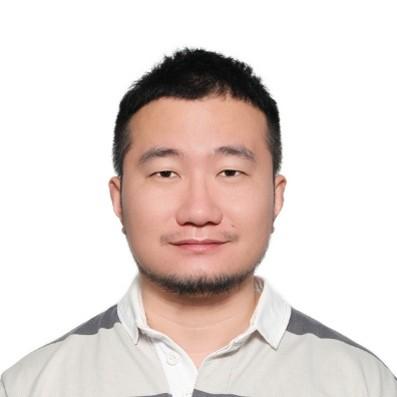
个人简介:
李挺,南方科技大学统计与数据科学系研究员,副教授。主持国家自然科学基金青年项目1项,获得国家级高层次人才项目(青年)。2014年本科毕业于浙江大学竺可桢学院数学英才班,2019年博士毕业于香港科技大学数学系,2019年8月至2021年5月于耶鲁大学生物统计系从事博士后研究。2021年6月-2025年12月在香港理工大学担任助理教授。长期从事复杂数据的统计研究以及大模型与生成模型,主要包括网络结构数据研究,复杂表型的基因相关性分析以及人脑图像数据分析。已在Annals of Statistics、JASA、Annals of Applied Statistics、Genome Research、Human Brain Mapping、ICML 等统计、生物统计核心期刊和机器学习顶会上发表论文19篇。
研究方向
复杂数据分析
大模型与生成模型
生物统计
人工智能
教育背景
2016.09 - 2019.07 香港科技大学 博士 数学(统计)
2014.09 - 2016.07 香港科技大学 硕士 数学(统计)
2010.09 - 2014.07 浙江大学 本科 数学与应用数学
工作经历
2026.01 – 南方科技大学 统计与数据科学系 副教授
2021.07 – 2025.12 香港理工大学 应用数学系 助理教授
2019.08 - 2021.05 耶鲁大学 生物统计系 博士后研究员
Publications and Preprint (^ equal contribution, * corresponding author, 'supervised student)
Machine Learning & Large Models:
Zhang, N., Xie, J., Yan, X., Jiang, B., Li T.* and Kong, L.*, (2026+). Renewable l 1-regularized linear support vector machine with high-dimensional streaming data. Journal of Computational and Graphical Statistics, Posted online.
Zhang C., Han Y., Wang Y., Yan X., Kong L., Li T.*, Jiang B.*. (2025). Differentially Private Analysis for Binary Response Models: Optimality, Estimation, and Inference. ICML 2025
Niu, S., Miao, F.', Li, T.*, Huang, J.*. (2025). Enhancing Brain Tumor Segmentation Generalizability Using Mean Teacher and Optimal Transport. MICCAI 2024 Challenges proceedings.
D. Huang', Li, T.*, J. Huang*. (2024). Bayesian Power Steering: An Effective Approach for Domain Adaptation of Diffusion Models. ICML 2024.
Network Data & Complex Data Analysis:
M. Che, Li, T., W. Pan, X. Wang, H. Zhang. (alphabetical). (2026+). Ball Impurity: Measuring Heterogeneity in General Metric Spaces. Journal of the American Statistical Association. Posted online.
J. Hu, Li, T., X. Wang. (alphabetical). (2026+). Aggregated Projectetion Method: A New Approach for Group Factor Model. Journal of the American Statistical Association. Posted online.
Ma, Y., Lan, W., Leng, C., Li, T., Wang, H. (2025). Supervised Centrality via Sparse Spatial Autoregression. Annals of Applied Statistics, 19(2): 1734-1752.
Li, T., Ying, N., Yu, X., Jing, B. Y. (2024). Semi-supervised learning in unbalanced and heterogeneous networks. arXiv:1901.01696. Statistics and Its Interface.
Jing, B., Li, T., Ying, N., & Yu, X. (alphabetical). (2022) Community Detection in Sparse Networks Using the Symmetrized Laplacian Inverse Matrix (SLIM). Statistica Sinica.
Jing, B. Y., Li, T., Lyu, Z., & Xia, D. (alphabetical). (2021). Community detection on mixture multi-layer networks via regularized tensor decomposition. Annals of Statistics. Code
Yu, X., Li, T., Jing, B., Ying, N. (2021). Collaborative Filtering with the Awareness of Social Networks. Journal of Business and Economic Statistics.
Brian Imaging & Biostatistics :
S. Su, Z. Li, L. Feng, Li, T. (2025). A General Framework of Brain Region Detection and Genetic Variants Selection in Imaging Genetics. Annals of Applied Statistics, 19(2): 1533-1552.
J. Lu, ... Li, T., ... D. Shum. (2025). An electronic health record-linked machine learning tool for diabetes risk assessment in adults with prediabetes. The Innovation Medicine, 3:100106.
S. Wang, Li, T., B. Zhao, W. Dai, Y. Yao, C. Li, T. Li, H. Zhu, H. Zhang. (2024). Identification and Validation of Super-variants Reveal New Loci for Human White Matter Microstructure. Genome Research, 34 (1), 20-33. Cover Paper.
J. Lu, ... Li, T., ... D. Shum. (2024). Development and validation of an electronic health record-linked machine learning tool for assessing type 2 diabetes risk in adults with prediabetes. The Innovation Medicine.
Dai, W., Li, C., Li, T., Hu, J., Zhang, H. (2022). Super-taxon in human microbiome are identified to be associated with colorectal cancer. BMC Bioinformatics. 23, 243 (2022).
Li, T., Hu, J., Wang, S., & Zhang, H. (2021). Super‐variants identification for brain connectivity. Human brain mapping, 42(5), 1304-1312.
Hu, J., Li, C., Wang, S., Li, T., & Zhang, H. (2021). Genetic variants are identified to increase risk of COVID-19 related mortality from UK Biobank data. Human genomics, 15(1), 1-10.
Hu, J., Li, T., Wang, S., & Zhang, H. (2020). Supervariants identification for breast cancer. Genetic Epidemiology, 44(8), 934-947.
Preprints:
D. Huang', J. Huang, Li, T., G. Shen. (alphabetical). Conditional Stochastic Interpolation for Generative Learning. JRSSB. Under review. arXiv:2312.05579.
Jing, B-Y, Li, T., Wang, J., Wang, Y. (alphabetical). Two-way Node Popularity Model for Directed and Bipartite Networks. Journal of Machine Learning Research. Under Revision. arXiv:2412.08051.
Gao, Z., Huang, J., Li, T., & Wang, X. (alphabetical). DeepSuM: Deep Sufficient and Efficient Modality Learning Framework. arXiv:2503.01728.
Niu, S., Miao, F.', Li, T.*, Huang, J.*. From Ground to Precision: Solving Heterogeneous Semi-Supervised Volumetric Medical Image Segmentation through Phased Learning.
Z. Lyu^, Li, T.^, D. Xia. Optimal Clustering of Discrete Mixtures: Binomial, Poisson, Block Models, and Multi-layer Networks. arXiv:2311.15598.
Jiang, H.', Zhang, W., Yang, L., Li, T.*, Tang, J.* Scalable Graph Classification without Pooling.
Li, T., Lyu, Z., Ren, C.', Xia, D. rMultiNet: An R Package For Multilayer Networks Analysis. Code
Li, T., Yu, X., Jing, B. Y.. Measuring the Clustering Strength of a Network via the Normalized Clustering Coefficient. arXiv preprint arXiv:1908.00523.
Li, T., Jing, B. Y. , Ying, N., Yu, X.. Adaptive Scaling. arXiv:1709.00566. https://doi.org/10.48550/arXiv.1709.00566 (Mphil thesis).