

师资
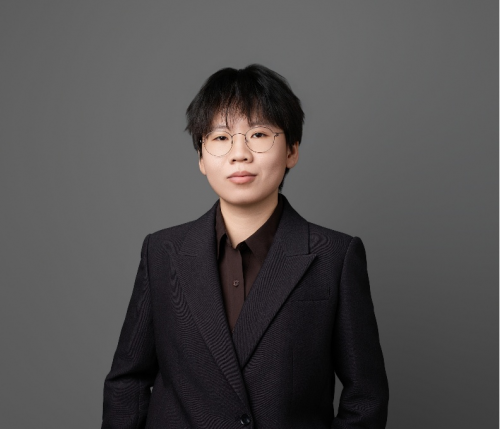
仉晶晶博士,南方科技大学化学系副教授、课题组长、博士生导师。2016年6月本科毕业于吉林大学化学学院,2021年6月获得清华大学博士学位,导师为程津培院士。2021年9月至2024年1月,在德国明斯特大学从事博士后研究,合作导师为Armido Studer教授。2024年2月至2026年1月,在瑞士苏黎世联邦理工学院继续从事博士后研究,合作导师为Tae-Lim Choi教授。2026年2月,加入南方科技大学,入选海外高层次人才计划青年项目,任独立课题组负责人(PI),领导课题组开展科研及团队建设工作。
仉晶晶课题组研究方向主要集中在主族元素催化自由基化学。以物理有机化学中的反应热力学以及动力学理论为基础,发展以主族元素为核心的新型自由基催化体系,并探索其在高分子合成中的应用。
研究简介
氢转移过程(负氢、质子、氢原子转移)普遍存在于生命代谢、有机合成、化工生产等人类活动中。氢转移相关的热力学及动力学研究一直是化学研究的核心课题之一,孕育了诸如酸碱理论、Hammett方程、Brönsted方程等重要的物理有机化学理论体系。同时,氢转移中化学键参数的测定和分析可为衡量化合物活性、研究反应机理、提炼反应规律提供系统的认知,从而促进新反应模式的开发和新型高活性试剂的发展。通过物理有机化学的研究手段,对有机氢转移试剂氢转移的调控机制及活性规律进行分析,揭示了不同氢转移形式下的能量关系;在化学键反应活性参数指导下,进行反应机理分析和新试剂设计。围绕氢转移试剂的热力学和动力学活性参数测定以及新结构、新反应、新型高活性试剂的发展,开展了相关系列研究。近几年,围绕此研究方向共发表论文15篇,包括Nature 1篇,Natl. Sci. Rev. 1篇,J. Am. Chem. Soc. 1篇, Angew. Chem. Int. Ed. 5篇,Nat. Commun. 2篇,Chem. Sci. 3篇。
荣誉奖励
德国洪堡学者(2022-2023)
北京市优秀毕业生(2021)
清华大学优秀博士论文(2021)
清华大学优秀毕业生(2021)
京博科技奖优秀博士奖(2021)
清华大学一二·九奖学金(2020)
研究生国家奖学金(2020)
研究生国家奖学金(2019)
代表论文
1. Zhang, J.; Mück-Lichtenfeld, C.; Studer, A. Photocatalytic phosphine-mediated water activation for radical hydrogenation. Nature 2023, 619, 506-513.
2. Zhang, J.; Studer, A. Decatungstate-catalyzed radical disulfuration through direct C-H functionalization for the preparation of unsymmetrical disulfides. Nat. Commun. 2022, 13, 3886.
3. Zhang, J.; Mück-Lichtenfeld, C.; Wiethoff, M.-A.; Studer, A. Photocatalytic PPh3-mediated synthesis of C3-functionalized indoles via radical annulation of nitroarenes and alkenes. Angew. Chem. Int. Ed. 2024, 63 (50), e202416726.
4. Zhang, J.; Spreckelmeyer, N.; Lammert, J.; Wiethoff, M.-A.; Milner, M. J.; Mück-Lichtenfeld, C.; Studer, A. Photocatalytic hydrogenation of quinolines to form 1,2,3,4-tetrahdyroquinolines using water as the hydrogen atom donor. Angew. Chem. Int. Ed. 2025, 64 (25), e202502864.
5. Zhang, J.; Kwak, M. K.; van Wesel, L.; Choi, T.-L. Degradation of postconsumer thermoset rubbers via photo-oxidation. J. Am. Chem. Soc. 2025, 147 (47), 43973-43980.
6. Zhang, J.;+ Yang, J.-D.;+ Zheng, H.; Xue, X.-S.; Mayr, H.; Cheng, J.-P. Exploration of the synthetic potential of electrophilic trifluoromethylthiolating and difluoromethylthiolating reagents. Angew. Chem. Int. Ed. 2018, 57, 12690-12695. (+ Both authors contributed equally)
7. Zhang, J.; Yang, J.-D.; Cheng, J.-P. A nucleophilicity scale for the reactivity of diazaphospholenium hydrides: structural insights and synthetic applications. Angew. Chem. Int. Ed. 2019, 58, 5983-5987.
8. Zhang, J.;+ Chen, Q.;+ Mayer, R. J.; Yang, J.-D.; Ofial, A. R.; Cheng, J.-P.; Mayr, H. Predicting absolute rate constants for Huisgen reactions of unsaturated iminium ions with diazoalkanes. Angew. Chem. Int. Ed. 2020, 59, 12527-12533. (+ Both authors contributed equally)
9. Zhang, J.; Yang, J.-D.; Cheng, J.-P. Chemoselective catalytic hydrodefluorination of trifluoromethylalkenes towards mono-/gem-di-fluoroalkenes under metal-free conditions. Nat. Commun., 2021, 12, 2835.
10. Zhang, J.; Yang, J.-D.; Cheng, J.-P. Recent progress in reactivity study and synthetic application of N-heterocyclic phosphorus hydrides. Natl. Sci. Rev. 2020, 8, nwaa253.
11. Zhang, J.; Yang, J.-D.; Cheng, J.-P. Exploiting the radical reactivity of diazaphosphinanes in hydrodehalogenations and cascade cyclizations. Chem. Sci. 2020, 11, 4786-4790.
12. Zhang, J.; Yang, J.-D.; Cheng, J.-P. Diazaphosphinanes as hydride, hydrogen atom, proton or electron donors under transition-metal-free conditions: thermodynamics, kinetics, and synthetic applications. Chem. Sci. 2020, 11, 3672-3679.
13. Zhang, J.; Yang, J.-D.; Cheng, J.-P. Diazaphosphinyl radical-catalyzed deoxygenation of α-carboxy ketones: a new protocol for chemo-selective C–O bond scission via mechanism regulation. Chem. Sci. 2020, 11, 8476-8481.
14. Zhang, J.;+ Zhao, X.;+ Yang, J.-D.; Cheng, J.-P. Diazaphospholene-catalyzed hydrodefluorination of polyfluoroarenes with phenylsilane via concerted nucleophilic aromatic substitution. J. Org. Chem. 2022, 87, 1, 294-300. (+ Both authors contributed equally)
15. Zhang, J.; Shao, Y.; Zheng, H.; Xue, X.-S. Transition state stabilization by SCF2−H⋅⋅⋅O bifurcated hydrogen bond. Chem. Asian J. 2023, 18, e202201244.